A story of transformation
Josu Devasia, country head for the Netherlands at Tata Consultancy, on talent, AI and the power of Zuidas
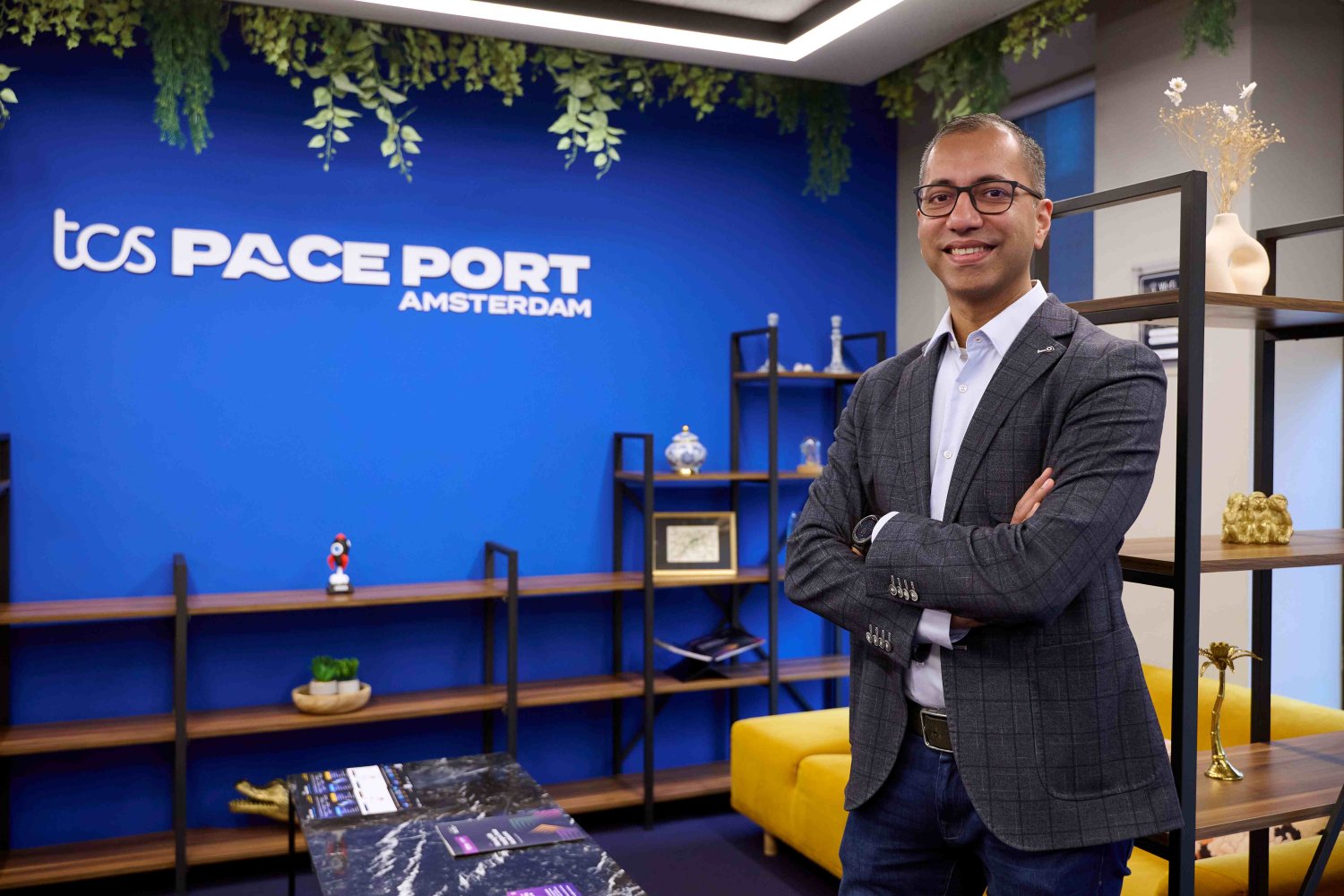
Josu Devasia arrived in the Netherlands twenty years ago and started working at Tata Consultancy Services (TCS) when it was still based in the Atrium, on the other side of Amsterdam Zuid station. Back then, Zuidas still just a small handful of buildings, mainly offices. Today, as country head for the Netherlands, Devasia leads an organisation that has grown strongly, in step with the district. In this issue’s featured interview, he reflects on his personal journey, the pull of the Zuidas ecosystem and why talent is the decisive factor in an era when AI is touching every profession. He also makes a case for stepping up education linking business with AI in order to keep the Netherlands competitive in tomorrow’s world.
Zuidas is rapidly evolving into a global business hub. What has this environment offered you both personally and professionally in your position as country head at TCS Netherlands?
“Looking back on the past twenty years, it’s one big story of transformation. The transformation of TCS, of Zuidas, of myself. When I first arrived here, Zuidas was small and TCS still a relatively unknown player. Now it’s a vibrant business district and place where people want to be. Professionally, the network effect is tremendous: thanks to the density of corporates, scale-ups and knowledge institutions, decisions are made faster and co-innovation happens more easily. This proximity is also incredibly valuable for talent, as the internationalism here means you can build multicultural teams closely aligned to clients.”
What makes Zuidas such a strong place for innovation and talent, in your view?
“I don’t need to explain it – you can see it all around. You’ve got big clients around the corner, partners nearby, universities supplying talent, and even competitors keep you sharp. That lowers barriers to collaboration. And makes innovation practicable, because you can connect and build things together more quickly. This in turn sparks new ideas and new connections.”
How do you envisage the future of Zuidas? What role can this district play in attracting worldwide talent and innovative enterprises?
“Zuidas is already ahead of many places. What makes it unique is the mix of corporates, startups, academia and residential life. I envisage Zuidas developing into a hybrid innovation district: a live-work-learn-innovate environment. Its accessibility and concentration of businesses make it a natural base for international companies, and it’s a magnet for talent, because besides work it offers a more complete package, with things like good restaurants and amenities, which is very different from how it used to be.”
Attracting top talent is a major priority in Zuidas. How does TCS define ‘talent’ as it applies to both today’s young professionals and experienced specialists?
“Talent is now the most important value differentiator for organisations. For us, talent is about more than ‘being clever’. We look for T-shaped people, with depth in a specific field as well as the breadth to collaborate across business, data and design. A growth mindset is also essential, so people who are curious, embrace change and proactively apply new technologies. We also place a strong emphasis on purpose and impact, on the ability to connect technology to measurable outcomes for both clients and society at large.”
How does TCS ensure employees continue developing in a sector that’s evolving so quickly, with AI, digital skills and large-scale upskilling?
“Continuous learning has to be embedded in your culture. We work with role-based learning pathways, cloud and AI certifications, and hands-on labs. We’re also increasingly emphasising skills, with badges and competencies to enable reskilling and internal mobility at scale and, for leaders, technical depth coupled to a client focus and change leadership. The pace isn’t slowing down, so learning needs to be structural.”
TCS is a global organisation but also has a strong local presence. How do you maintain that balance between global scale and local culture?
“We deliver global experience aligned to the Dutch context and regulatory environment. Local teams need to be able to make decisions keyed to individual clients yet supported by global best practices. In recent years we’ve also invested in more capabilities for the local sector, including government and public organisations, making us a more comprehensive partner in the Netherlands. Community ties are also important to stay locally relevant. Things like education projects and social initiatives anchor you.”
TCS Pace Port Amsterdam has made a name as an innovation hub for co-creation and novel technology. How does Pace Port help TCS attract talent and strengthen its position in the Zuidas community?
“AI is part of every client conversation. Many organisations are still formulating their playbooks: what do we do, how do we do it, where do we start? Pace Port helps clients experiment with the latest technologies without having to build everything themselves. They can test use cases, build pilots and then implement with confidence. It’s also a magnet for talent. People are keen to work with cutting-edge tech. For Zuidas, it showcases this ecosystem in action.”
If you could accelerate or change one thing in the Dutch talent ecosystem, what would it be?
“Talent is crucial to stay in the AI race. The Netherlands is a small country, so we need to compete on the innovative mindset and pioneering spirit that made this country strong historically. Since we don’t have the scale to go it alone, we need to be open to partnerships and ecosystems. Specifically, I think we need to open up our universities more to attract strong international talent. At the same time, there are plenty of technical AI programmes but very few linking business with AI. This is a missed opportunity, because more and more jobs, from lawyers to doctors, are being touched by AI. Private universities often adapt faster, and it would be good if public universities were also more responsive. Otherwise, we’ll be forced to continue importing talent instead of training enough of our own people for the world of tomorrow.”
Text: Romy Lange
Photography: Roxanne Wilm